
Agency rank tracking is one of the most important tools for any digital marketing agency. If you want to help clients grow online, you need to know where their websites stand on search engines like Google. Without this, you’re flying blind.
In this detailed guide, we’ll explore everything about agency rank tracking in a simple and clear way. Whether you are a beginner or already working in SEO, this article will help you understand how to track rankings, why it matters, and how to do it like a pro.
What Is Agency Rank Tracking?
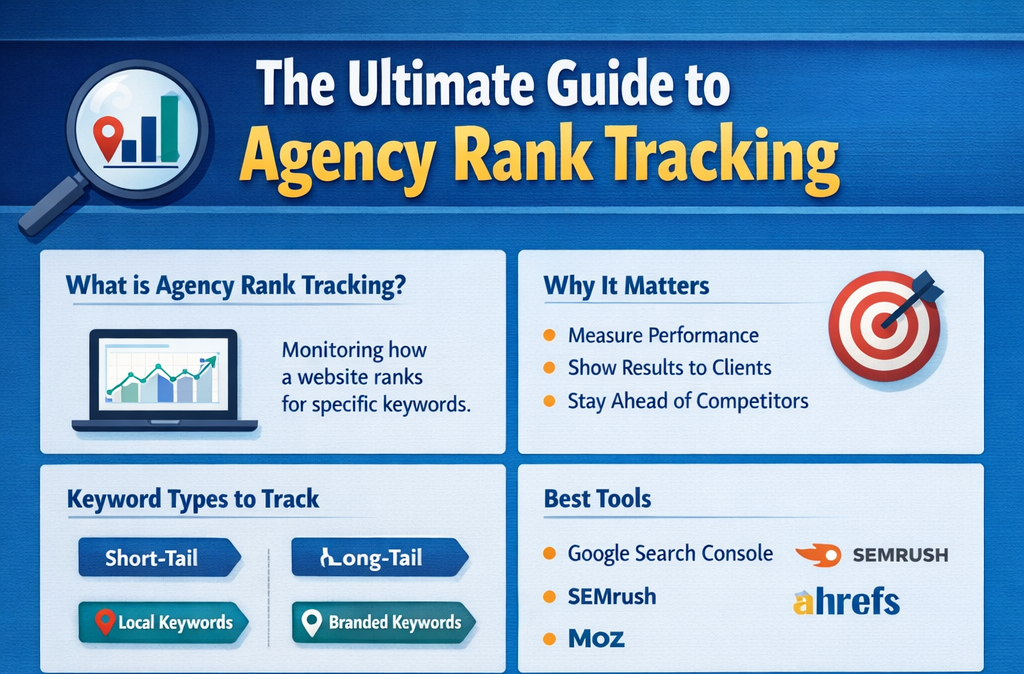
Agency rank tracking is the process of checking and monitoring how well a website ranks for specific keywords in search engines.
In simple words:
- It tells you where your client’s website appears in search results
- It shows which keywords are improving or dropping
- It helps you measure SEO success over time
For example, if your client sells shoes and ranks #5 for “best running shoes,” rank tracking helps you see if that position improves to #3 or drops to #10.
Why Agency Rank Tracking Matters
Let’s be honest—SEO without tracking is like driving without a map. You won’t know if you’re going in the right direction.
Here’s why agency rank tracking is so important:
- Measure performance
- Show results to clients
- Find problems early
- Improve strategies
- Stay ahead of competitors
When agencies use proper rank tracking, they make smarter decisions and build trust with clients.
How Agency Rank Tracking Works
Understanding how agency rank tracking works is quite simple.
Step-by-step process:
- Choose target keywords
- Use a rank tracking tool
- Check positions in search results
- Monitor changes daily or weekly
- Analyze data and improve strategy
Search engines change rankings often, so tracking helps you keep up with these changes.
Types of Keywords You Should Track
Not all keywords are equal. A good agency rank tracking strategy includes different types of keywords.
Main keyword types:
- Short-tail keywords
Example: “shoes”
High competition, high traffic - Long-tail keywords
Example: “best running shoes for beginners”
Lower competition, more targeted - Local keywords
Example: “shoe shop in Karachi”
Great for local businesses - Branded keywords
Example: your client’s business name - Transactional keywords
Example: “buy running shoes online”
Tracking a mix of these keywords gives a full picture of performance.
Best Tools for Agency Rank Tracking
There are many tools available for agency rank tracking, and each has its own strengths.
Popular tools include:
- Google Search Console
- SEMrush
- Ahrefs
- Moz Pro
- SERPWatcher
- AccuRanker
What to look for in a tool:
- Accurate ranking data
- Daily updates
- Location-based tracking
- Competitor tracking
- Easy reporting features
Choosing the right tool can save time and improve results.
Key Features Every Agency Needs
When selecting a system for agency rank tracking, focus on features that help you work smarter.
Must-have features:
- Real-time tracking
- Keyword grouping
- White-label reports
- Competitor analysis
- Mobile vs desktop tracking
These features help agencies deliver professional and clear results.
Agency Rank Tracking for Local SEO
Local SEO is a big deal, especially for small businesses. That’s where agency rank tracking becomes even more powerful.
Why local tracking matters:
- Rankings change based on location
- Customers search for nearby services
- Google shows different results in different areas
Example:
A restaurant in Karachi might rank:
- #2 in its local area
- #8 in another city
That’s why agencies must track rankings based on location.
Common Challenges in Agency Rank Tracking
Even though agency rank tracking is helpful, it comes with challenges.
Common problems:
- Ranking fluctuations
- Personalized search results
- Tool differences
- Too much data
How to handle these:
- Focus on trends, not daily changes
- Use reliable tools
- Keep reports simple and clear
How to Report Rank Tracking to Clients
Clients don’t just want data—they want clear insights. Good reporting is key in agency rank tracking.
Tips for better reports:
- Use simple language
- Highlight improvements
- Explain drops honestly
- Include visuals like graphs
- Show next steps
Example report structure:
| Section | Details |
|---|---|
| Overview | Summary of performance |
| Keyword Rankings | Current positions |
| Changes | Gains and losses |
| Competitors | Comparison with others |
| Action Plan | What to do next |
Clear reporting builds trust and keeps clients happy.
Best Practices for Agency Rank Tracking
Want to get the best results? Follow these proven tips for agency rank tracking.
Smart practices:
- Track the right keywords
- Monitor regularly (weekly is best)
- Focus on long-term growth
- Combine ranking data with traffic data
- Keep learning and updating strategies
SEO is always changing, so staying flexible is important.
The Future of Agency Rank Tracking
The world of SEO is evolving, and so is agency rank tracking.
Trends to watch:
- AI-powered tracking tools
- Voice search rankings
- Mobile-first indexing
- Personalized search results
- Better automation
Agencies that adapt to these trends will stay ahead of the competition.
Mistakes to Avoid in Agency Rank Tracking
Even experienced agencies make mistakes. Avoid these common errors in agency rank tracking:
- Tracking too many irrelevant keywords
- Ignoring local SEO
- Checking rankings too often
- Not explaining results to clients
- Relying on one tool only
Avoiding these mistakes will improve your workflow and results.
How Agency Rank Tracking Improves Business Growth
At the end of the day, agency rank tracking isn’t just about numbers—it’s about growth.
Benefits for businesses:
- More visibility online
- Higher website traffic
- Better conversion rates
- Stronger brand presence
- Increased revenue
When done right, rank tracking becomes a powerful tool for success.
Final Thoughts on Agency Rank Tracking
Agency rank tracking is the backbone of successful SEO campaigns. It gives agencies the data they need to make smart decisions, improve strategies, and deliver real results.
By tracking the right keywords, using reliable tools, and reporting clearly, agencies can build strong relationships with clients and help them grow online. physics fundamentals